
Guides · 3 min read
How to Copy a Baseboard Profile with a Contour Gauge
Trace an existing baseboard and use a paper template to check the fit before marking the panel.
Quick answer
To fit a panel around an existing baseboard, press a contour gauge squarely against the molding, lock the pins, and trace the outline onto stiff paper. Mark the floor edge and the room-facing side on the paper. Check that template against the actual baseboard before transferring the outline to the panel.
Set the panel’s reference edges
This method works when a shelf side, toe kick, or other panel needs to fit over existing trim. Picture where the panel will sit. Mark the bottom edge on your template as FLOOR, and mark the visible face as ROOM SIDE. Use the actual bottom height of the panel if it will sit on feet or spacers. Those marks preserve the orientation once you move to the bench.
Make sure the pins can cover the whole height of the molding and move far enough to record its deepest recess. Also check that the gauge body can fit in the space. If the baseboard shape changes across the front and back faces of a thick panel, check both faces before settling on one outline.
Capture and transfer the profile
- Square the gauge to the trim. Start with the pins free to move. Hold the gauge in the same plane as the face you need to mark, with the reference end at the height you chose. A combination square can help you reproduce that alignment at the bench.
- Press and lock. Let the pins follow the molding. If the body hits the trim before the pins reach the recess, stop and reassess the fit. Engage the lock while holding the shape steady.
- Trace the same side. Put the locked gauge on your paper with the reference edge aligned. Trace the edge that touched the baseboard. Use a pencil to mark the cutout area for removal.

Check the paper fit before cutting stock
Cut out the paper template and bring it back to the baseboard. Hold it at the intended height and with ROOM SIDE facing the room. Check the top lip, deepest groove, and bottom corner. When all three align, transfer the outline to the same face and reference edge of the actual panel. Follow the relevant cutting tool instructions and test the fit on scrap if you are unsure.
| What you see | What to check |
|---|---|
| The curve is reversed | You may have flipped the template or traced the opposite side of the pins. |
| The whole shape sits too high | Recheck the floor reference and the intended bottom height of the panel. |
| The shoulders fit, but the deepest part does not | Check whether the body stopped the pins before they reached the recess. |
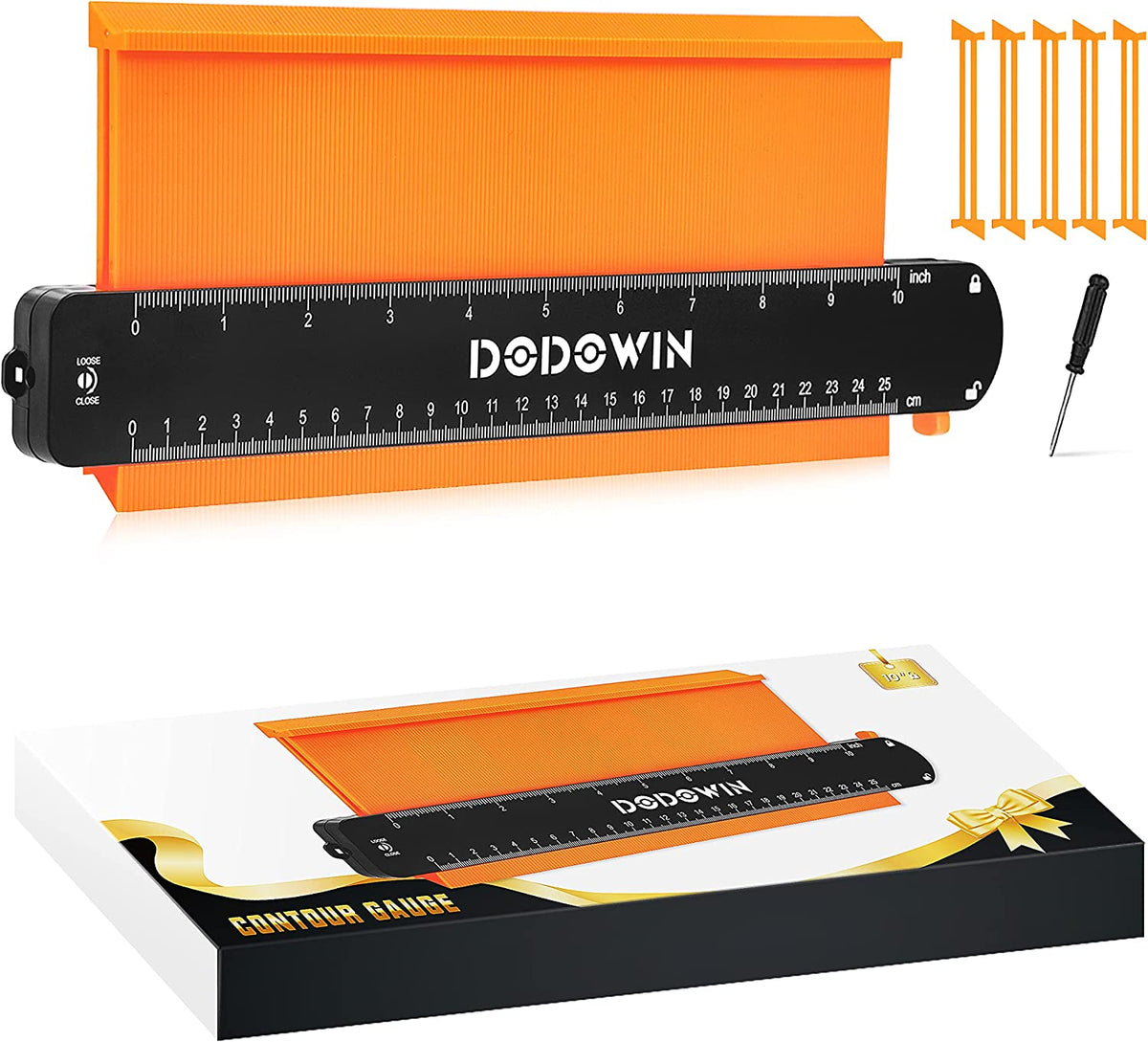
The DODOWIN 10-Inch Contour Gauge has a locking pin bank. If your profile calls for a longer joined tool or a shorter section in a cramped space, see the connectable gauge comparison.
Can I use the same template at both ends of a board?
Check the second end in place first. The wall, floor height, or molding can change. Give the new end its own orientation marks if the first paper template does not fit it.
Sources: DODOWIN single/dual orange contour gauge manual, PDF page 4, and current 10-inch product gallery. See also wolfcraft’s guide to profile transfer.